Twenty years of watching
governance fail in silence.
SOM/TFF was built because the same structural failures kept appearing in the same places, at the same point in every transformation, and nobody had a language for them, let alone a way to measure them.
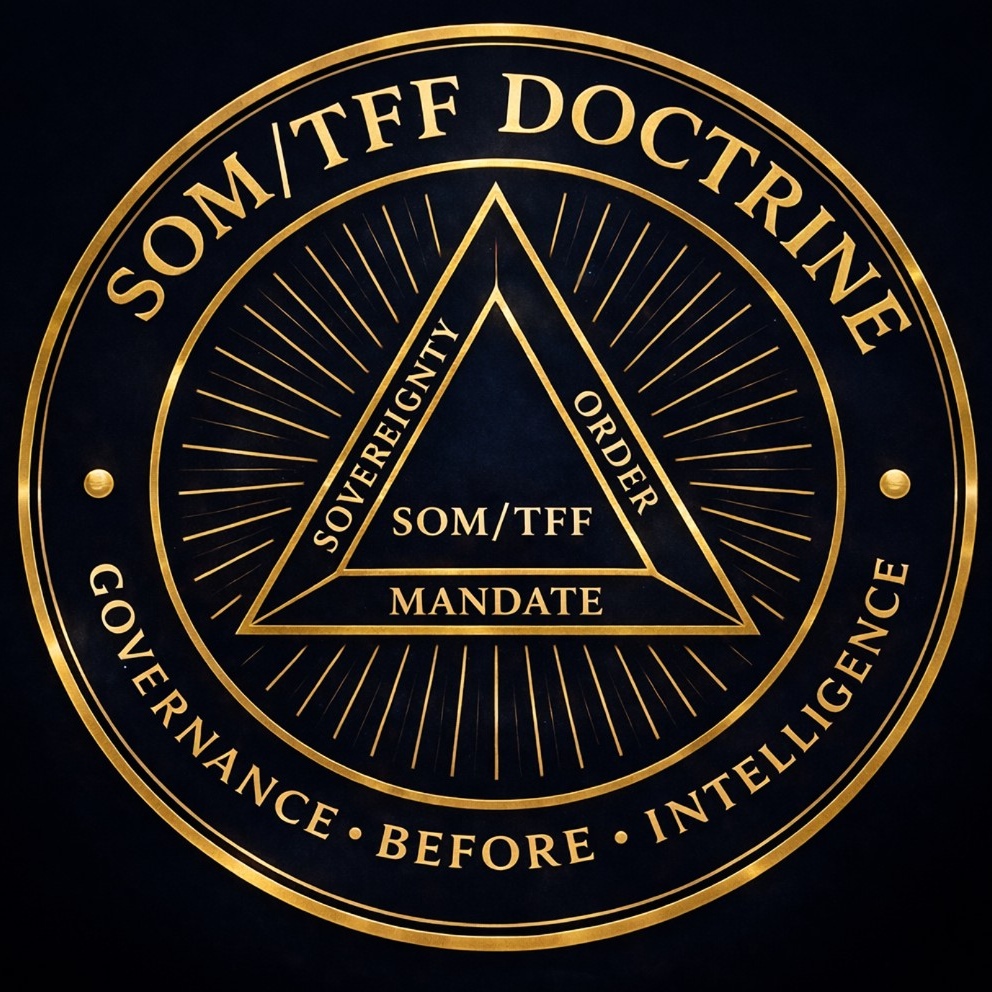

SOM/TFF did not start as a framework. It started as a pattern. After more than two decades of transformation work across Fortune 500 companies and PE portfolios, the same structural failures kept surfacing at the same point in every engagement. Mandates that were clearly stated at the top but unrecognizable at the front line. Decision authority that existed on paper but collapsed under pressure. Organizations that could articulate their strategy but could not execute it, not because the strategy was wrong, but because the structure beneath it could not hold the weight.
The frameworks being used to address these failures were compliance frameworks. They described what good governance looked like. None of them explained why governance broke, how it broke, or where in the structure the break occurred. That gap is what SOM/TFF was built to close.
"Governance isn't a policy. It's the physics your organization runs on. Policies get written. Physics operates whether you acknowledge it or not."
The SOM/TFF framework emerged from 300 assessments, distilled into a set of structural laws that operate the same way regardless of industry, size, or geography. The Triune Law of Sovereignty, Order, and Mandate describes the three forces every organization must hold in constitutional balance. When one of them drifts, the others compensate, and then fail. The failure mode is predictable. The timing is measurable. The intervention point is identifiable.
What took two decades to identify through observation can now be measured in 30 to 120 days through a structured diagnostic. That is the purpose of the SOM/TFF Institute and its instrument suite.
SOM/TFF operates on a custodial rather than a consulting model. The doctrine belongs to the world. The mechanics and the tools stay with the Custodian. Every engagement is delivered through the same constitutional physics. The tier determines the scope, depth, and platform access. The Custodian reviews and approves every output before it reaches the client.
This is not a platform where clients self-serve a score and interpret it alone. Every engagement includes the judgment of the person who built the framework and has applied it across 300 organizations. That accountability is non-transferable.
The Triune Law of Governance Physics
Three forces. Every organization. Operating simultaneously, whether measured or not. Constitutional health requires all three to be in balance.
The doctrine in print
Six works that carry the SOM/TFF framework into the public record. The doctrine travels freely. The mechanics stay with the Custodian.


The principles that don't move
Ready to measure what your
organization is actually running on?
Every engagement starts with a conversation. No obligation, no pitch deck. Just an honest look at where governance health sits today and what it would take to move it.